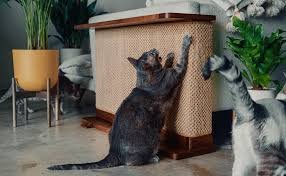
Have you ever come home to find your sofa scratched, your favorite chair covered in claw marks, or the corners of your furniture looking worse for wear? If you share your home with a cat, you may already know how frustrating this can be.
You might have bought toys, told your cat to stop, or even moved your furniture around, only to find that the scratching continues. The good news is that scratching is a completely natural behavior for cats, and you do not need to punish your pet or give up on protecting your home.
Cats scratch for several important reasons. It helps them maintain their claws, stretch their muscles, mark their territory, and release energy. Your furniture may simply be the most convenient or appealing scratching surface available.
The key is to understand why your cat scratches and provide better alternatives that meet its needs.
In this guide, we will explore the common reasons cats scratch furniture, explain how to redirect the behavior, and share practical ways to protect your home while keeping your cat happy and comfortable.
Why Do Cats Scratch Furniture?
Before trying to stop your cat from scratching the sofa or chairs, it helps to understand what motivates the behavior.
Scratching is not necessarily a sign that your cat is misbehaving. It is a normal part of feline life, and even well-trained indoor cats need appropriate opportunities to scratch.
Here are the main reasons your cat may be targeting your furniture.
- Scratching Helps Maintain Healthy Claws
Cats naturally use scratching to help remove the outer layers of their claws. This exposes the sharper layers underneath and helps keep their claws in suitable condition.
Your cat may scratch a wooden chair leg, carpet, or sofa because the material provides the resistance it needs.
This behavior is particularly common when a cat wakes up, finishes playing, or moves between resting places.
Providing a sturdy scratching post gives your cat an appropriate place to perform this natural activity.
- Your Cat Is Marking Its Territory
Cats communicate through scent as well as body language and vocalizations.
Their paws contain scent glands, and scratching can leave both scent and visible marks on a surface. These signals help cats establish familiar areas within their environment.
This is one reason cats may repeatedly scratch the same sofa corner, doorway, or chair.
Your cat is not deliberately trying to damage your belongings. It may simply be marking a location that feels important or secure.
If your cat repeatedly scratches a particular spot, placing a scratching post nearby can help redirect the behavior without taking away the opportunity to mark that area.
- Your Furniture Has an Appealing Texture
Some cats prefer rough surfaces that allow their claws to grip easily. Others enjoy the feel of carpet, cardboard, sisal rope, or natural wood.
Unfortunately, many household furnishings offer exactly the kind of texture cats enjoy.
A fabric sofa provides resistance, a carpeted stair offers a vertical scratching surface, and a wooden chair leg may feel satisfying under their claws.
Understanding your cat’s preferences is essential when choosing a scratching post.
If your cat loves scratching a carpet, a horizontal cardboard scratcher may work better than a tall post wrapped in rope.
- Your Cat Needs to Stretch and Release Energy
Scratching is also a physical activity.
When cats stretch against a vertical surface, they extend their bodies, engage their muscles, and move their shoulders and legs.
Some cats scratch after waking up because it helps them stretch before moving around.
Others scratch furniture when they are excited, playful, or looking for an outlet for excess energy.
Regular interactive play, climbing opportunities, and scratching surfaces can help satisfy these needs.
- Your Cat May Be Bored or Stressed
Changes in the home can influence scratching behavior.
A cat that lacks stimulation may scratch more frequently because it has few other activities available. Stress can also contribute to changes in behavior, particularly when the household routine or environment changes.
Possible triggers include:
Moving to a new home.
Introducing another pet.
Changes in household routines.
Conflict with another cat.
Limited access to hiding places or elevated resting areas.
Insufficient opportunities for play and exploration.
Scratching alone does not prove that a cat is stressed or bored. However, if it increases suddenly or appears alongside hiding, appetite changes, excessive grooming, or aggression, it is worth investigating the underlying cause.
10 Simple Ways to Stop Your Cat From Scratching Furniture
You cannot realistically expect a cat to stop scratching altogether. Instead, the goal is to make appropriate scratching surfaces more attractive than your furniture.
These practical steps can help you protect your home while respecting your cat’s natural behavior.
- Provide a Sturdy Scratching Post
One of the most effective ways to protect your furniture is to give your cat a suitable scratching post.
However, simply buying a post and placing it in an unused corner may not solve the problem.
The post needs to match your cat’s preferences.
For cats that enjoy stretching upward, choose a tall post that allows them to extend their bodies fully. It should also be stable enough that it will not wobble or tip over during use.
Look for materials such as sisal rope, sisal fabric, or other durable scratching surfaces.
If your cat prefers scratching the side of your sofa, a vertical post may be a good starting point. If it scratches carpets or rugs, try a horizontal scratcher instead.
Helpful tip: Place the new scratching post close to the furniture your cat already scratches. Once your cat uses it consistently, you can gradually move it to another suitable location if needed.
- Try Different Scratching Materials
Not every cat likes the same scratching surface.
Some cats enjoy the rough texture of sisal, while others prefer corrugated cardboard, carpet-like materials, or wood.
If your cat ignores a new scratching post, it does not necessarily mean the post is poor quality. It may simply be the wrong texture or orientation.
Consider offering two or three different options and observing which one your cat prefers.
For example:
A vertical sisal post for stretching and scratching upward.
A horizontal cardboard scratcher for cats that prefer floor-level surfaces.
A sturdy angled scratcher for cats that enjoy scratching at a slope.
You do not need to buy every type at once. Start with a surface that resembles the furniture your cat currently targets.
Once you identify your cat’s preference, you can invest in more suitable scratching furniture.
- Place Scratching Posts in the Right Locations
Location can make a big difference.
Cats often scratch in places where they spend time, near important pathways, or around their favorite resting spots.
If your cat scratches the sofa every morning, placing a scratcher nearby may be more effective than putting it in a quiet room that your cat rarely visits.
Good locations often include:
Beside the sofa or favorite chair.
Near your cat’s sleeping area.
Close to frequently used doorways.
In rooms where your cat spends the most time.
Near windows or other interesting viewing areas.
For homes with multiple cats, provide enough scratching opportunities to reduce competition.
A few strategically placed scratchers are often more useful than one expensive post hidden away from the areas your cat enjoys.
- Make the Furniture Less Appealing
While teaching your cat to use a scratching post, you can protect vulnerable furniture by making the surface less convenient to scratch.
There are several practical options.
Furniture protectors: Clear protective sheets designed for pet scratching can help shield fabric and upholstery.
Sofa covers: Washable covers can provide a barrier between your cat’s claws and the original material.
Corner guards: These can protect exposed edges that attract repeated scratching.
Temporary barriers: A suitable physical barrier can discourage access to a particular area while your cat learns to use an alternative.
Choose products that are designed for use around pets, and follow the manufacturer’s instructions.
Avoid loose coverings, dangling strings, or materials that could trap your cat’s claws. If you use adhesive-based protectors, make sure your cat cannot chew or swallow the adhesive material.
The aim is to protect the furniture while making the alternative scratching surface easy to reach.
- Use Catnip or Toys to Encourage Scratching Posts
If your cat ignores its new scratching post, try making it more interesting.
Some cats respond to catnip, while others prefer toys, treats, or interactive play.
You can sprinkle a small amount of catnip on or near the scratching surface if your cat responds to it.
Another option is to move a wand toy around the post so your cat naturally reaches toward the surface with its paws.
You can also reward your cat with a small treat whenever it uses the scratching post voluntarily.
Avoid grabbing your cat’s paws and forcing them against the post. This can make the experience uncomfortable and may cause your cat to avoid it.
Let your cat explore at its own pace.
Not every cat responds to catnip, particularly young kittens, so do not worry if it has no noticeable effect.
- Trim Your Cat’s Claws Regularly
Keeping your cat’s claws at an appropriate length can help reduce the damage caused by scratching.
Regular trimming does not eliminate the need to scratch, but it may make accidental snags and scratches less severe.
Use nail clippers designed specifically for cats, and remove only the small, transparent tip of each claw.
Avoid cutting the pink area inside the claw, known as the quick, because it contains blood vessels and nerves.
If your cat becomes frightened or struggles during nail trimming, stop and try a gentler approach over several short sessions. A veterinarian or professional groomer can show you the correct technique if you are unsure.
Never punish your cat for resisting nail care.
Some cats tolerate having one or two claws trimmed at a time, which can make the process easier for both the pet and the owner.
- Keep Your Cat Physically and Mentally Active
A cat with plenty of appropriate activities may be less likely to use furniture as an outlet for excess energy.
Daily play helps satisfy your cat’s hunting instincts and provides opportunities for movement and exploration.
Try activities such as:
Interactive wand-toy sessions.
Treat puzzles and food-dispensing toys.
Short games that encourage chasing and pouncing.
Climbing shelves or cat trees.
Safe window-viewing areas.
Rotating toys to maintain interest.
Several short play sessions can be easier to manage than one long session.
Always let your cat catch the toy occasionally, and put away wand toys with strings after play to prevent accidental swallowing or entanglement.
Mental stimulation will not necessarily stop scratching by itself, but it can help create a more satisfying environment for your cat.
- Reward the Behavior You Want
Positive reinforcement is often more effective than punishment when teaching a cat where to scratch.
Whenever your cat uses an appropriate scratching surface, reward the behavior with something it enjoys.
This could be a small treat, gentle praise, or a short play session.
Consistency matters. If the scratching post is available and rewarding, your cat has a reason to return to it.
If you catch your cat scratching the sofa, calmly redirect its attention toward a nearby scratching post or toy. Reward it if it uses the appropriate surface.
Avoid shouting, hitting, spraying water, or frightening your cat.
Punishment can increase stress and may teach your cat to avoid scratching when you are nearby rather than helping it learn an appropriate alternative.
The goal is to make the desired behavior rewarding, not to make your cat afraid of making a mistake.
- Keep Your Cat’s Environment Comfortable
Cats are sensitive to their surroundings, and changes in their environment can affect their behavior.
Make sure your cat has comfortable resting areas, places to hide, access to fresh water, and opportunities to explore safely.
In multi-cat households, provide enough separate resources, including resting spots, feeding areas, litter boxes, and scratching surfaces, to reduce competition.
If scratching increases after a move, the arrival of a new pet, or another major change, give your cat time to adjust.
Maintain a predictable routine where possible and allow your cat to approach new experiences gradually.
If you suspect stress is contributing to the behavior, a veterinarian can help determine whether environmental changes or additional support may be appropriate.
- Be Patient and Consistent
Changing a scratching habit takes time.
If your cat has scratched the same sofa corner for months or years, it may continue returning to that location even after you introduce a new post.
Instead of changing your approach every day, keep the alternative available and reward its use consistently.
Make the preferred scratching surface easy to access, protect the vulnerable furniture, and observe what your cat responds to.
Some cats adapt quickly, while others need more time and several different scratching options.
If one post is ignored, try changing its position, material, height, or orientation before giving up.
Consistency helps your cat learn which surfaces are appropriate without making the home environment frightening or unpredictable.
Which Scratching Post Is Best for Your Cat?
Choosing the right scratching post depends on how your cat likes to scratch.
Scratching preference Suitable option Why it may help
Scratches sofa sides Tall vertical post Allows full-body stretching
Scratches carpets Horizontal cardboard scratcher Offers a floor-level surface
Scratches chair corners Vertical scratcher or corner guard with a nearby post Provides a similar scratching position
Scratches after waking up Scratcher near the sleeping area Makes stretching and scratching convenient
Scratches several locations Multiple scratchers around the home Provides easy access to appropriate surfaces
Ignores ordinary posts Try different materials and angles May better match individual preferences
A good scratching post should be stable, durable, and large enough for your cat to use comfortably.
If you have more than one cat, remember that preferences may differ. One cat may love cardboard while another prefers a tall sisal post.
Should You Use Sprays to Stop Cats From Scratching Furniture?
You may come across sprays marketed to discourage cats from scratching certain surfaces.
These products vary, and their effectiveness is not guaranteed. More importantly, some essential oils, fragrances, and household chemicals can be harmful to cats.
Never assume a product is safe simply because it is described as natural.
Avoid applying essential oils, strong fragrances, chili-based mixtures, or harsh cleaning products to areas your cat may lick or rub against.
If you choose a commercial deterrent, check that it is specifically intended for use around cats and follow its directions carefully.
A physical furniture protector combined with an appealing scratching post is often a more practical starting point than relying on a scent-based deterrent.
The most effective long-term approach is usually to provide an acceptable alternative rather than simply trying to make every existing surface unpleasant.
What Should You Do If Your Cat Suddenly Starts Scratching More?
Scratching is normal, but a sudden change in behavior deserves attention.
If your cat has always scratched a little and suddenly begins damaging furniture much more frequently, consider whether something has changed.
Possible explanations include a new pet, a different household routine, fewer opportunities for play, or changes in the cat’s environment.
However, sudden behavioral changes can sometimes be associated with discomfort or illness.
Watch for additional signs such as:
Hiding more than usual.
Changes in appetite or drinking.
Increased vocalization or aggression.
Excessive licking or grooming.
Limping or reluctance to jump.
Changes in litter box habits.
If these signs appear, or if the behavior changes abruptly without an obvious explanation, contact your veterinarian.
A veterinarian can help rule out medical problems and recommend appropriate next steps.
Common Mistakes to Avoid When Managing Cat Scratching
Even well-intentioned cat owners can accidentally make scratching problems harder to solve.
Here are some common mistakes to avoid:
Punishing the cat: Fear and stress may make behavior problems worse.
Buying only one small scratching post: It may be too short, unstable, or poorly positioned.
Placing the scratcher far from the problem area: Your cat may continue using the furniture because it is more convenient.
Removing every scratching opportunity: Cats need appropriate surfaces to scratch, so removing them entirely does not solve the underlying need.
Ignoring individual preferences: Some cats prefer horizontal surfaces, while others need vertical posts.
Using unsafe homemade deterrents: Certain chemicals and essential oils can be dangerous to cats.
Expecting instant results: Established habits may take time to change.
Declawing as a furniture solution: Declawing is not equivalent to nail trimming and involves amputating the last bone of each affected toe. It can cause lasting pain and other complications and should not be treated as a routine solution to scratching.
Instead, focus on environmental changes, suitable scratching surfaces, reward-based training, and regular claw care.
Frequently Asked Questions
Why does my cat scratch the sofa even when it has a scratching post?
Your cat may prefer the sofa’s texture, location, or stability. Try placing a sturdier scratching post beside the sofa and experimenting with different materials or orientations. Reward your cat whenever it uses the post.
Can I train my cat to stop scratching furniture completely?
You can often redirect scratching away from furniture, but you should not try to eliminate scratching altogether. It is a normal feline behavior that helps cats stretch, maintain their claws, and communicate through scent and visual marks.
Do scratching posts really work?
Yes, an appropriate scratching post can help redirect the behavior, particularly when it matches your cat’s preferences. However, the post’s material, size, stability, and location all influence whether your cat will use it.
How many scratching posts should I have?
There is no single number that works for every home. Providing several scratching surfaces in the areas your cat uses most is a useful starting point. Multi-cat households may need additional posts to reduce competition.
Does scratching mean my cat is angry?
Not necessarily. Scratching is a normal behavior and does not automatically indicate anger or frustration. Cats may scratch when stretching, marking territory, playing, or maintaining their claws.
Will trimming my cat’s claws stop furniture damage?
Trimming can reduce the sharpness of the claw tips and may limit some damage, but it will not remove the motivation to scratch. Continue providing appropriate scratching surfaces even when you trim your cat’s claws.
Final Thoughts
Cats scratch furniture for natural reasons, including claw maintenance, stretching, scent marking, and releasing energy. Although the behavior can be frustrating, it does not mean your cat is being deliberately destructive.
The best way to protect your home is to make appropriate scratching surfaces more appealing than your furniture.
Start by identifying your cat’s preferred scratching style, placing a sturdy scratcher near the problem area, and protecting vulnerable furniture with suitable covers or guards. Add regular play, reward appropriate scratching, and keep your cat’s environment comfortable.
Most importantly, avoid punishment and give your cat time to develop new habits. Every cat has different preferences, so you may need to experiment with several surfaces and locations before finding the right combination.
With patience, a little observation, and the right scratching equipment, you can protect your furniture while allowing your cat to enjoy a natural and important behavior. A cat-friendly home does not have to mean sacrificing your favorite sofa.