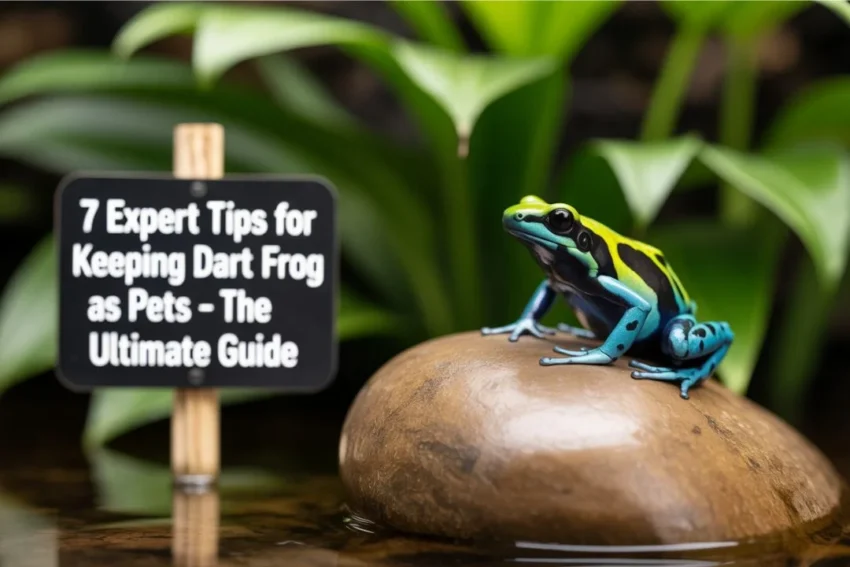
Keeping a Dart Frog as a Pet – A Complete Guide
If you are looking for a unique and charming pet, dart frogs as pets can be a great choice. These colorful and small frogs have gained a lot of popularity in recent years, especially among those interested in reptiles or amphibians.
What are dart frogs?
Dart Frogs are actually small but very colorful frogs found in the rainforests of South America. These frogs are naturally poisonous, but when they are raised in captivity, they do not produce the poison, because their poisonous food is found in the natural environment, which is not available in captivity.
Is it safe to keep a dart frog as a pet?
Yes! Since captive-bred dart frogs are not poisonous, they are perfectly safe to keep. However, their care requires specific knowledge and environment, which must be understood and maintained.
Benefits of Keeping a Dart Frog as a Pet
Attractive and unique colors
Dart frogs look very unique due to their attractive colors and unique design, which can add beauty to any terrarium.
Less space required
These frogs are small in size, so they don’t require much space, which is a great advantage for those who live in apartments or small homes.
Don’t make noise.
Unlike other pets, they do not make sounds or noise, giving you a peaceful environment.
Environment required for dart frog
Humidity and temperature
Dart frogs need a humid environment. 70-100% humidity and a temperature of 22 to 27 degrees Celsius are ideal for them.
Light
UVB lights or specific reptile lighting help restore their natural environment.
Diet
They usually eat fruit flies, pinhead crickets, or small insects. Their diet also needs to include calcium and vitamins to stay healthy.
What are the things to consider before raising a dart frog?
Do your research: Get complete information about their breed, diet, environment, and health.
Prepare the environment: Ensure they have the right terrarium, humidity, light, and food.
Licenses and legal permits: Some countries or regions require a license to keep dart frogs.
6 Benefits of Keeping a Dart Frog as a Pet
Beauty and charm
Dart frogs are very beautiful, colorful, and charming animals that will make your terrarium beautiful.
Requires less space.
They are small in size, so they do not require a large space or cage to be raised.
Do not make noise
Dart frogs are quiet and don’t make many sounds, making them perfect for those who like a quiet environment.
Lived on a low diet
They eat small insects and their food is in small quantities, so they are also less expensive.
Not poisonous (in captivity)
Dart frogs raised in captivity are not poisonous, so they are safe to keep at home.
A unique experience
This is a rare and unique pet, which provides a different experience from others.
6 Disadvantages of Keeping a Dart Frog as a Pet
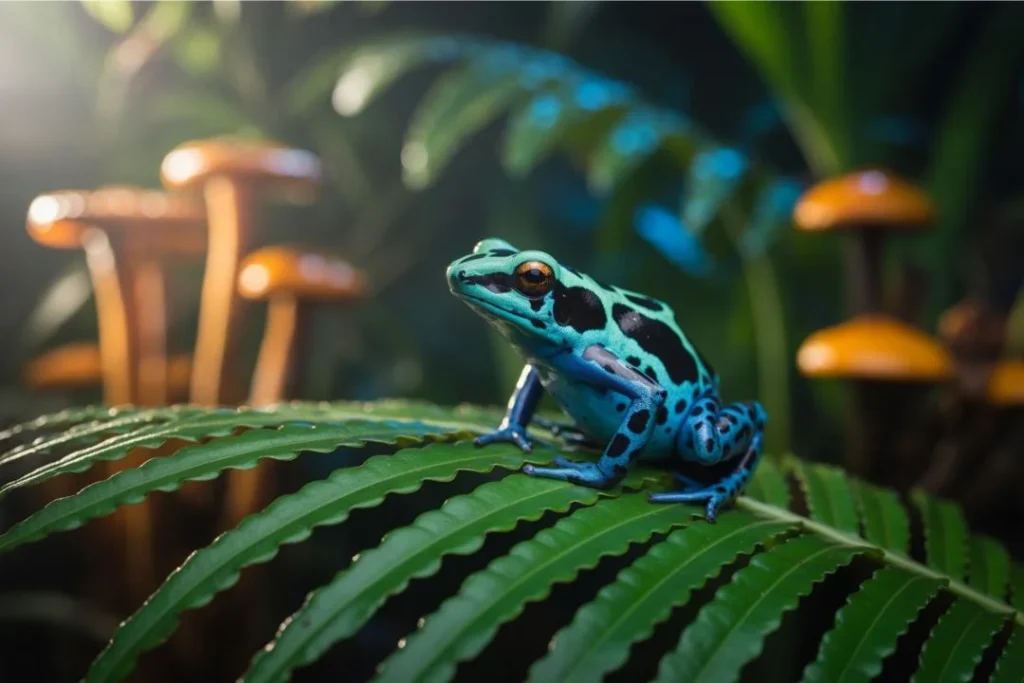
Sensitive care
The dart frog’s environment is very delicate, especially in terms of humidity, temperature, and light, which must be taken into account.
Prohibition of touching
Initially, purchasing specialized equipment for the terrarium, humidity control, heating, and lighting can be expensive.
Expensive setup
Touching them can be harmful, as their skin is sensitive and germs can be transmitted through hands.
Not suitable for children.
They are not suitable for playing, so they are not considered suitable pets for children.
Limited interaction
Your relationship with a dart frog is limited to watching and caring, there is no emotional connection or mutual play.
Availability of food
Their food (such as fruit flies or small insects) is not readily available everywhere, which can be a problem.
Dart Frogs as Pets – FAQs (in English)
1. Is it safe to keep a dart frog as a pet?
Yes, captive-bred dart frogs are not poisonous, so they are safe to keep as pets. However, due to their sensitive skin, unnecessary handling should be avoided.
2. What environment is required to care for a dart frog?
Dart frogs prefer a humid and semi-humid environment. Humidity levels should be between 70% and 100% and temperatures between 22-27°C. It is best to set up a terrarium with UVB light and natural plants.
3. What do dart frogs eat?
Dart frogs typically eat fruit flies, pinhead crickets, springtails, and other small insects. It is important to pay attention to the amount of calcium and vitamins in their diet.
4. Is it appropriate to hold a dart frog in your hand?
No, dart frogs have very delicate and sensitive skin. Touching them can transmit germs or harmful substances, so it’s best to enjoy them only for the sake of sight.
5. Do dart frogs make noise?
Male dart frogs may speak in soft voices, especially during the breeding season, but these voices are not noisy and are not usually disturbing.
6. What is the average lifespan of a dart frog?
Dart frogs raised in captivity can live for 10 to 15 years if properly cared for.
7. Are dart frogs good pets for children?
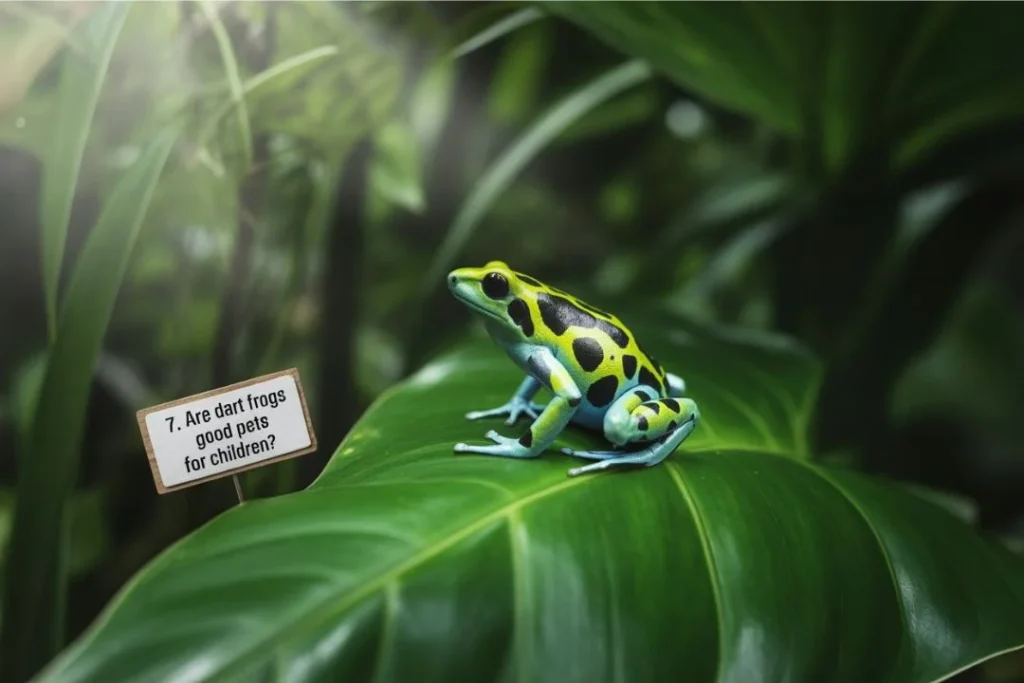
Since it is not possible to play with dart frogs directly, and their care requires a specific environment, they are not considered suitable for young children. However, it can be a unique hobby for adults or teenagers.
8. Can a dart frog be kept alone?
Yes, dart frogs can be kept singly. However, some species also live peacefully in groups, provided they are provided with the appropriate space and environment.
(Conclusion)
If you are looking for a unique, beautiful, and quiet pet, dart frogs as pets can be a great choice. Their colorful bodies, quiet nature, and small size make them suitable for a home environment. However, their care requires caution and a specific environment that cannot be ignored.
Dart frogs are especially suitable for people who love animals but don’t want to put up with the noise or the burden of a large animal. If you get the necessary information and create a suitable environment for them, these colorful little frogs can provide you with years of joy and a charming sight.
So, if you want to be a responsible pet owner, dart frogs as pets can be a beautiful combination of your passion and taste.