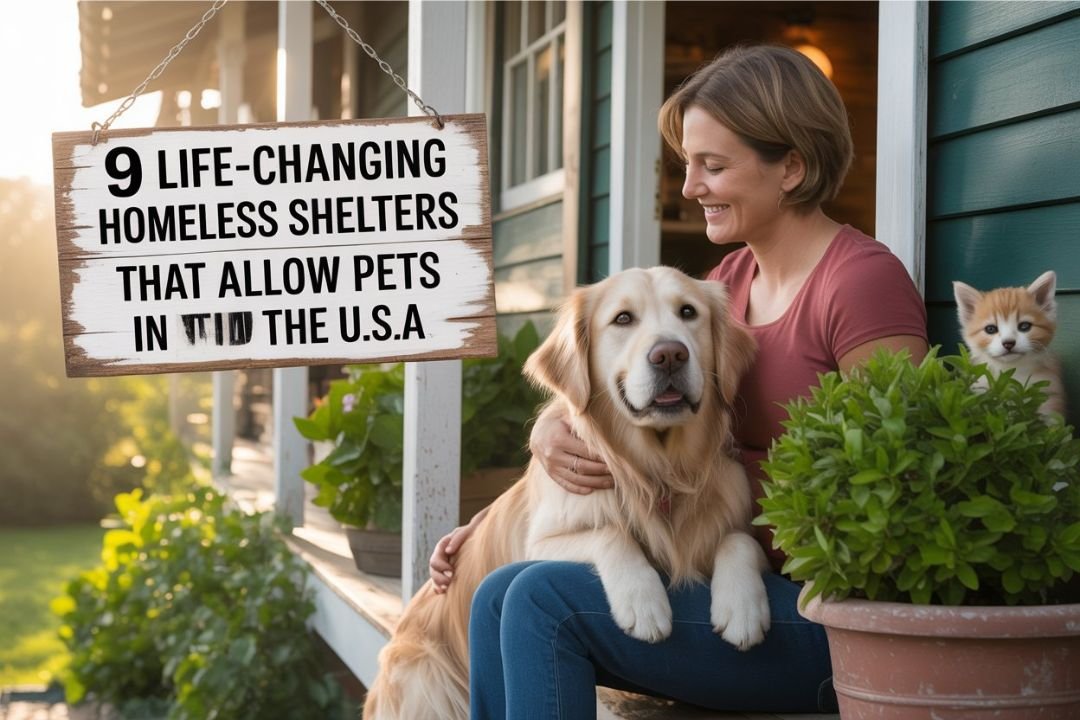
Introduction:
For people facing homelessness, pets often provide unconditional love, comfort, and emotional support. But for many, the heartbreaking reality is that most shelters don’t allow animals. That forces a painful choice: find safety or stay with your pet.
Thankfully, a growing number of homeless shelters that allow pets are now recognizing the deep human-animal bond. These forward-thinking programs provide shelter without requiring people to abandon their companions.
In this article, we’ll explore 9 incredible homeless shelters that allow pets, understand their impact, and highlight how this compassionate model is saving both human and animal lives.
Why Pet-Friendly Shelters Matter
According to the National Coalition for the Homeless, approximately 10% of homeless individuals own pets, with some cities reporting numbers as high as 25%.
Pets provide:
- Emotional stability
- Protection
- Companionship
- Mental health support
But traditional shelters often prohibit pets due to hygiene, allergies, or liability concerns, forcing pet owners to sleep outdoors or in unsafe conditions.
That’s why homeless shelters that allow pets are crucial — they remove barriers to housing and promote long-term stability.
1. PATH (People Assisting the Homeless) – Los Angeles, CA
PATH is one of California’s largest homeless service organizations. In partnership with Pets Are Wonderful Support (PAWS), PATH operates facilities where pets are welcome alongside their owners.
Services Offered:
- Pet-friendly shelter rooms
- On-site veterinary support
- Food and supplies for pets
- Counseling and housing support
PATH recognizes that keeping people and pets together creates stronger, more trusting relationships between case workers and clients.
✅ Focus Keyword Used: homeless shelters that allow pets
2. The Urban Resource Institute (URI) – New York City

URI’s PALS (People and Animals Living Safely) program is a national leader. It became the first New York City shelter system to offer co-living for domestic violence survivors and their pets.
Unique Features:
- Separate pet-friendly apartments
- On-site pet parks
- Behavioral training
- Pet therapy programs
This model is inspiring similar efforts across the U.S. — proof that homeless shelters that allow pets are essential for holistic recovery.
3. Denver Rescue Mission – Denver, CO
Partnering with PetSmart Charities, Denver Rescue Mission created specific accommodations for people experiencing homelessness who have pets.
Highlights include:
- Emergency shelter beds for pet owners
- Food/water access for animals
- Pet medical support in certain locations
By focusing on dignity and inclusion, Denver is showing how cities can embrace homeless shelters that allow pets without compromising safety.
4. The Road Home – Salt Lake City, UT
This Utah-based shelter offers family housing programs that accept pets. Collaborating with the Humane Society, they provide veterinary care, spay/neuter services, and supplies.
A major success story, The Road Home found that pet-inclusive shelters help reduce barriers to permanent housing and increase emotional stability.
✅ Focus Keyword Used Again: homeless shelters that allow pets
5. Seattle’s DESC (Downtown Emergency Service Center)
DESC is among the few low-barrier shelters in Seattle that welcome pets. Their Housing First model includes support for mental illness, addiction, and now, pet ownership.
They offer:
- Designated pet rooms
- Animal behavior screening
- Pet support from volunteers
By recognizing pets as family, DESC has seen higher intake success and longer stays — important steps to breaking the cycle of homelessness.
6. Humane Society of Tampa Bay – Florida
Though not a traditional shelter, HSTB partners with local housing nonprofits to temporarily house pets while their owners transition to permanent housing.
This “foster shelter” model keeps pets safe while the owner finds stable housing — a humane alternative to forced separation.
7. Faithful Friends Pet Support Program – Oregon
Faithful Friends collaborates with Oregon shelters to create shared shelter spaces for homeless individuals and their pets.
They also offer:
- Leash training
- Vaccination support
- Pet food banks
- Foster placements in emergencies
Such partnerships prove how combining human and animal welfare strengthens community trust.
8. Homeward Bound – Minnesota
Homeward Bound provides pet-friendly housing solutions for homeless youth and families. Pets are allowed in designated family units, and pet-related expenses are covered by donations.
This inclusive model ensures families stay intact during their hardest moments.
9. PAWS Atlanta Emergency Shelter Initiative
PAWS Atlanta partners with local domestic violence and homeless shelters to offer short-term shelter for pets, allowing individuals to find safe housing.
They also assist with:
- Reunification programs
- Therapy animal services
- Low-cost vaccinations
This model promotes safety and compassion while keeping pets out of danger.
National Progress: A Growing Movement
While the list of homeless shelters that allow pets is growing, it’s still a small percentage. But the trend is positive:
- California, New York, Washington, and Colorado lead in pet-inclusive shelters
- Funding from organizations like PetSmart Charities, RedRover, and the ASPCA is helping expand capacity
- Cities like San Diego and Chicago are launching pilot projects focused on co-sheltering humans and pets
Advocacy is growing, with many calling for nationwide policies supporting pet-friendly housing in emergency shelter systems.
Challenges to Expanding Pet-Friendly Shelters

While the benefits are clear, expanding homeless shelters that allow pets isn’t easy. Key challenges include:
- Limited space in urban shelters
- Staff concerns about pet allergies or behavior
- Zoning or health regulations
- Lack of pet-specific funding
However, creative solutions like mobile vet clinics, pet fostering programs, and pet food partnerships are helping overcome these barriers.
What Can You Do?
Whether you’re an advocate, donor, or someone with lived experience — you can help.
Ways to support pet-friendly homelessness programs:
- Donate to shelters that house pets
- Volunteer with organizations like RedRover or PAWS
- Advocate for pet-friendly housing policies
- Foster animals for owners in transition
- Spread awareness about shelters that accept pets
Every action counts in helping both people and pets find safety together.
Final Thoughts
Choosing between shelter and a beloved pet is a decision no one should ever face. That’s why homeless shelters that allow pets are not just compassionate — they’re critical to creating an inclusive, effective solution to homelessness.
As more shelters adopt pet-friendly policies, families can stay whole, individuals can feel safe, and society moves one step closer to treating everyone — human or animal — with dignity.